
Intro
Lagos is a city that never slows down. From sunrise to midnight, food is part of its rhythm. Street corners, markets, and parties all tell their stories through flavor. To understand Lagos, you need to taste its food. The journey starts with puff-puff in the morning, moves to suya at night, and reaches its peak with owambe Jollof rice at a party.
Puff-Puff – The Morning and On-the-Go Snack
Puff-puff is one of the simplest but most loved snacks in Lagos. Golden, round, and fried fresh on the roadside, it is soft inside with a slightly crisp outside. You find it everywhere: markets, bus stops, and busy street corners. Lagosians grab a small bag for breakfast or a quick bite while rushing through the day.
Vendors sell them by the piece, often at five or ten naira each in local spots, or packed into small portions for about ₦100–₦200. Some versions are plain, while others are dusted with sugar or spiced with pepper for an extra kick. Puff-puff isn’t fancy. It’s everyday Lagos food. It’s how the city fuels its mornings.
Suya – The Nighttime Favorite
When the sun sets, suya takes over the streets. This spicy grilled meat, usually beef or chicken, is prepared by Hausa vendors known as Mai Suya. The process is simple but powerful: meat is skewered, roasted over open fire, and coated with a peppery suya spice mix.
You can smell it before you see it. On Allen Avenue in Ikeja, around university gates, and in almost every Lagos neighborhood, suya stands attract crowds at night. Friends gather, order sticks of suya, and eat it with slices of onion and fresh tomato. A stick usually costs between ₦500–₦1000, depending on the size.
Suya isn’t just food. It’s social. It is the taste of Lagos nightlife, shared at roadside tables long after the city should be asleep.
Jollof Rice – The Owambe Star
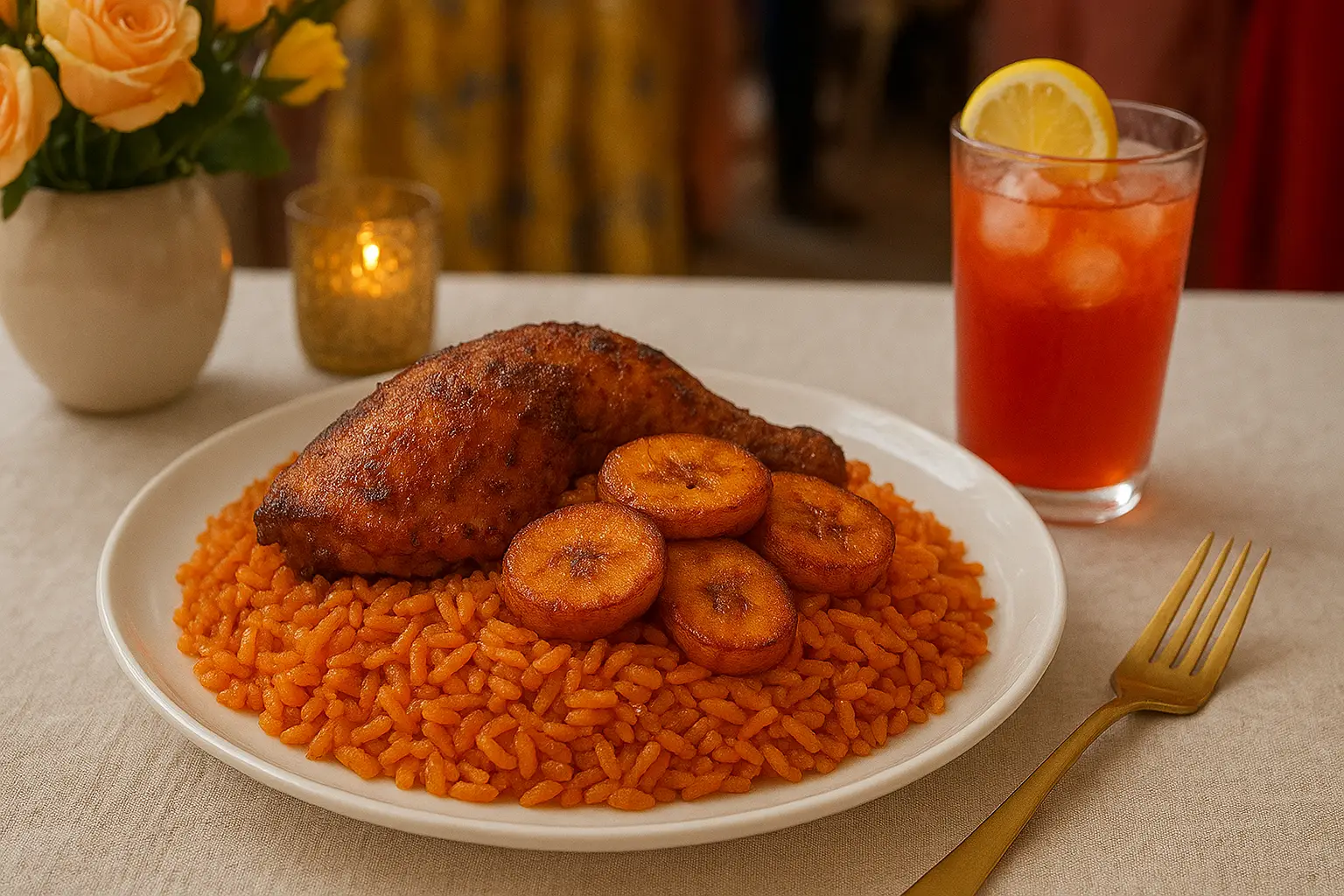
No discussion of Lagos food is complete without Jollof rice. At home, it is a regular meal. At an owambe party, it becomes something else entirely. Owambe Jollof is the true star of every celebration, whether it’s a wedding, birthday, or naming ceremony.
It is cooked in massive aluminum pots over firewood, giving it a smoky depth you cannot replicate in small batches. The bright red color, rich aroma, and layered flavor make it unforgettable. Party guests look forward to it so much that “party Jollof” has become a phrase of its own. People often joke that the success of an owambe depends on how good the Jollof rice tastes.
A plate usually comes with fried plantain, grilled chicken, or moi-moi on the side, turning it into a full feast. More than food, Jollof rice at owambe represents joy, celebration, and the Lagos love for coming together.
The Lagos Food Circle
This is the rhythm of Lagos food. Start the morning with puff-puff. End the night with suya. Celebrate life in between with owambe Jollof rice. Each dish plays its part, and together they tell the story of Lagos.
For a traveler, tasting this cycle is as important as visiting landmarks or markets. Food is how Lagos expresses its culture, its speed, and its spirit.
Tips for Travelers
- Where to try puff-puff: Markets like Balogun and Ojuelegba bus stop stalls.
- Where to find suya: Allen Avenue (Ikeja), University of Lagos main gate, and Lekki Phase 1 roundabout.
- Where to experience owambe Jollof: Attend a wedding or family celebration if invited. For a close substitute, visit popular bukas that cook in large batches with firewood.
- Budget: Puff-puff from ₦100, suya from ₦500, Jollof rice plates from ₦1000–₦2000 in bukas.
- Best times: Morning for puff-puff, late night for suya, weekends for owambe Jollof.
Conclusion
Lagos food is more than a meal. It’s a timeline of the city itself. Puff-puff shows you the hustle of the morning. Suya gives you the flavor of its restless nights. Owambe Jollof crowns it all with celebration and joy. If you want to taste the real Lagos, follow this food journey. It’s where the culture lives.
Leave a Reply